
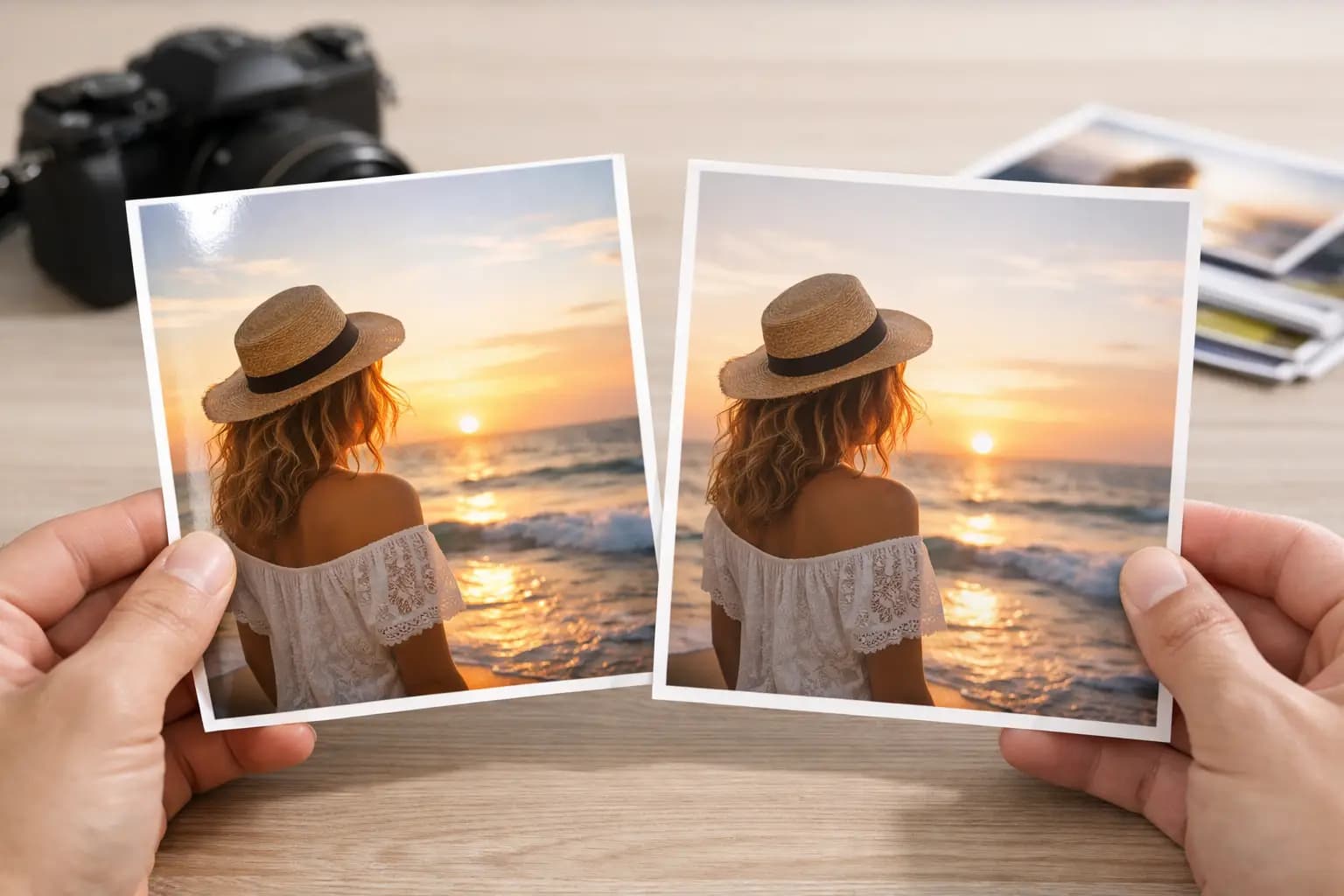
You can take the same photo, print it in two finishes, and end up with two quite different results. That is why gloss vs matte photo prints is one of the most common questions people ask before ordering. The right choice depends less on rules and more on where the print will go, how often it will be handled, and what you want the picture to look like once it is in your hands.
Gloss vs matte photo prints at a glance
If you want bright colour, deeper contrast and a polished look, gloss usually stands out first. It tends to make images look punchy, especially holiday shots, family portraits with strong colour, and mobile phone photos taken in good light. A glossy surface reflects more light, which helps colours appear richer and detail look crisp.
Matte is the quieter option. It has a softer, less reflective finish, so it does not catch glare in the same way. That makes it easier to view under lamps, near windows, or in frames behind glass. Matte prints also tend to show fewer fingerprints and smudges, which matters if prints are being passed around or added to scrapbooks and albums.
Neither is better in every situation. The best finish is the one that suits how you will use the print.
What gloss photo prints look like
Gloss photo prints have a shiny surface that reflects light. This gives them a clean, vivid appearance that many people associate with traditional photo lab prints. Colours can look more saturated, blacks often appear deeper, and the overall image can feel sharper.
That extra shine works particularly well for photos with bold colour and strong contrast. Beach scenes, birthday parties, sunsets, children in bright clothing, and travel photos often look very lively in gloss. If you are printing pictures to pop in an album or hand out to family, gloss can give that classic fresh-from-the-lab look.
The trade-off is glare. If a glossy print is displayed in a bright room or under direct spotlights, reflections can make parts of the image harder to see. Gloss also shows fingerprints more easily than matte, so if the print will be handled often, you may notice marks sooner.
What matte photo prints look like
Matte photo prints have a flatter, non-shiny finish. They still show detail and colour well, but the overall effect is softer and more understated. Many customers choose matte when they want a print to feel a bit more refined or practical rather than glossy and vivid.
Because matte reduces reflections, it is often a safer choice for framed prints, wall displays, and photos viewed in mixed lighting. You can usually see the image more clearly from different angles without the distraction of shine. This is especially useful for family photos displayed in living rooms, hallways, or offices.
Matte also handles day-to-day use well. If you are creating albums, memory books, collages, or gift prints that will be touched regularly, the surface is generally more forgiving. Fingerprints, dust and small scuffs are usually less obvious.
When gloss is the better choice
Gloss makes sense when impact matters most. If you want prints that look bright, crisp and colourful straight away, it often delivers exactly that. Photos taken outdoors in good light usually suit gloss well, as do images with lots of detail and contrast.
It is also a popular option for standard photo prints that will be stored in albums or given to relatives. The finish feels familiar and photo-like in the traditional sense, which is why many people still choose it for everyday print orders.
Gloss can also help if your image feels slightly flat on screen. The added contrast and shine may give it a bit more life in print. That said, if the photo is already very dark, heavily edited, or full of shiny surfaces, the effect can sometimes feel a little too strong.
When matte is the better choice
Matte works well when practicality matters as much as appearance. If the photo is going into a frame behind glass, matte often avoids the problem of double glare from both the print and the glass. That makes it a smart option for home display.
It is also a good choice for portraits, black and white images, softer landscapes, and sentimental older photos. The finish can make these images feel calmer and less harsh. If you are printing scanned family photos or restored images, matte often suits the character of the picture.
For gifts, matte can be the safer all-rounder when you are not sure where the recipient will place the print. It is easy to view, easy to handle and tends to stay looking tidy with less fuss.
Framed prints, albums and gifts
One of the easiest ways to decide between gloss and matte is to think about the final use rather than the photo itself.
For albums, both can work well. Gloss gives that bright printed-photo feel, while matte is easier to handle if lots of people will be turning the pages. If you are putting together a family album for regular use, matte may be the more practical option. If the album is more of a keepsake with vibrant recent photos, gloss may suit it better.
For frames, matte often has the edge, especially behind glass and in well-lit rooms. Reflections are less distracting, so the image stays easier to enjoy. Gloss can still look excellent in frames, but it tends to suit spaces with controlled lighting.
For gifts, it depends on style and purpose. A cheerful set of holiday snaps or children’s prints can look great in gloss. A more elegant portrait, wedding image or memorial photo may feel better in matte. If in doubt, think about whether you want the print to stand out or sit more softly in its surroundings.
Does photo quality change with the finish?
The finish does not fix a poor photo, but it can change how the final print is perceived. Gloss often makes sharp images look even sharper because contrast appears stronger. Matte can soften the overall look slightly, which may flatter some portraits and older images.
This is why there is no single right answer in the gloss vs matte photo prints debate. Two people can print the same image in different finishes and both make the right choice for their needs. One may want bold colour for an album. The other may want a framed print with no glare.
Good print quality still starts with the image file, the paper and the lab process. The finish is the final layer that shapes how the photo feels when printed.
A simple way to choose
If you are stuck, ask yourself three questions. Will the print be handled a lot? Will it be displayed in bright light or behind glass? Do you want vivid impact or a softer finish?
If handling and glare are the main concerns, matte is usually the safer option. If colour, shine and a classic printed-photo look matter more, gloss is often the better fit.
For mixed orders, there is nothing wrong with choosing different finishes for different jobs. A stack of everyday family prints might suit gloss, while a framed enlargement for the wall may be better in matte. Matching the finish to the purpose usually gives the best result.
At Photo Zone, that practical approach matters. People are not ordering prints to debate paper theory. They want photos that look right, arrive quickly, and suit the way they will actually be used.
The choice that usually works best
If you like bright, lively prints and you mostly keep them in albums or photo boxes, gloss is likely to please you. If you want fewer marks, less glare and an easier option for display, matte is often the better pick. Neither choice is complicated once you stop looking for a universal winner and start thinking about the job the print needs to do.
A good photo deserves a finish that fits its place in your home, your album, or your gift bag - and once you know what matters most, the choice becomes much easier.