
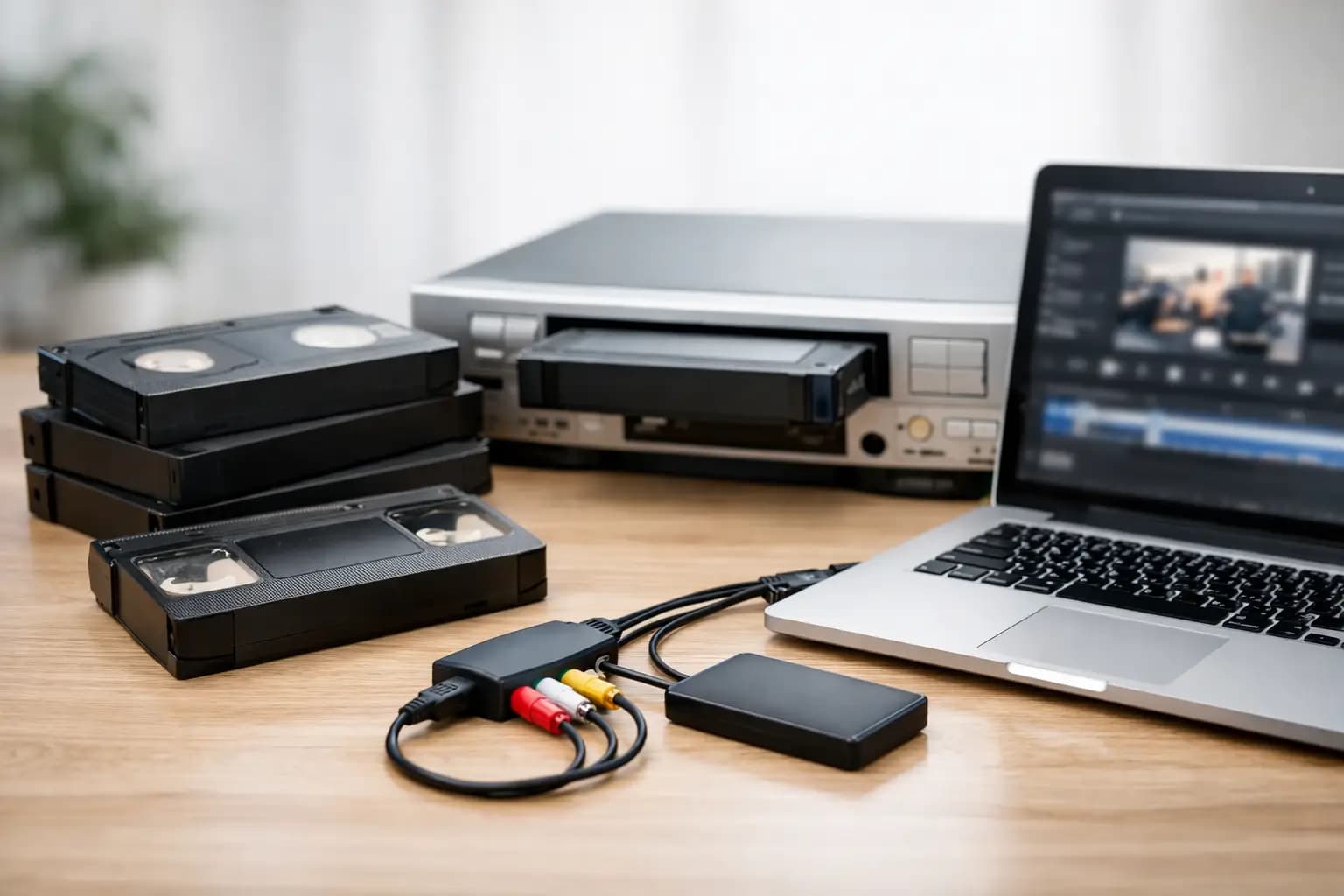
That box of VHS tapes in the loft is not getting any safer. Magnetic tape degrades over time, mould can set in, and old players are getting harder to find and keep working. If you are looking at VHS to digital conversion UK services, the main goal is simple - keep those family recordings watchable without turning the process into a technical project.
For most households, this is not about studio-grade archiving. It is about weddings, birthdays, school plays, holiday footage and relatives who are no longer around. You want a service that handles tapes carefully, produces a clear digital copy, and makes the whole thing straightforward from start to finish.
Why VHS to digital conversion in the UK still matters
VHS had a long life in British homes, which means a lot of important memories still sit on ageing tapes. The problem is that VHS was never built for long-term storage. Even if a tape looks fine on the outside, the picture can fade, the sound can drop, and the cassette itself can become brittle.
There is also the issue of equipment. A working VHS machine is now a specialist item rather than something most people have under the telly. Even when you do find one, playback quality can vary. A poor machine can chew a tape, add tracking problems or simply refuse to play it at all.
Digital conversion solves both problems. Once your footage is transferred, it is easier to watch, copy and share with family. It also gives you options. You can save files on a USB, store backups, or use clips in family slideshows and printed memory projects.
What happens during VHS to digital conversion UK services
At its simplest, the tape is played back on suitable equipment and captured into a digital format. Good services do more than just press record. They check playback stability, monitor the signal, and make sure the final file is usable on everyday devices.
This matters because no two tapes age the same way. One cassette may play perfectly, while another has tracking lines, weak audio or damage from poor storage. A reliable transfer service will know how to handle these differences without overpromising miracles.
In some cases, the tape itself is the biggest limitation. VHS is a low-resolution format by modern standards, so conversion will not make old footage look like HD video. What it should do is preserve the best possible version of what is already there. That is a much more realistic expectation, and a useful one.
VHS, VHS-C and camcorder tapes
Many customers use “VHS” as a catch-all term, but formats vary. Standard VHS cassettes are the large tapes most people recognise. VHS-C tapes are the smaller camcorder versions that often need an adaptor for playback. Some households also have mixed collections from different decades.
This is worth checking before you send anything off. A service may handle several tape types, but not every provider includes every format as standard. Knowing what you have helps avoid delays and keeps pricing clearer.
Digital formats and delivery options
Most people now prefer their converted footage on USB or as digital files they can store on a computer. DVD is still useful for some families, especially if they want something physical and familiar, but it is not always the most flexible long-term option.
USB tends to suit everyday use better. It is easier to copy, easier to back up and easier to share. If you have several tapes, ask how files will be named and organised. Clear labelling makes a big difference when you are trying to find a christening from 1994 instead of a summer holiday from 1997.
How to choose a VHS to digital conversion UK provider
The best service is usually the one that keeps things simple while still taking care over quality. That means looking beyond the cheapest headline price. Tape transfer is not just a commodity if the recordings matter to you.
A UK-based provider has practical advantages. Your tapes stay within the country, turnaround is often faster, and communication is easier if you need help. For many customers, that reassurance matters as much as the file format.
It is also worth checking whether the company handles transfers as part of an established photo or media service, rather than as a side line. Teams used to working with prints, negatives, scanning and analogue formats tend to understand preservation properly. That experience usually shows in how they package, process and return original items.
Quality versus cost
Price matters, but cheap transfers can be false economy if the output is poor or the process is unclear. Some services charge very little up front, then add extras for USB copies, longer tapes or additional files. Others offer a clearer all-in service.
The right balance depends on what you need. If the tape only contains a short recording and you just want one digital copy, a basic package may be fine. If you have irreplaceable family footage, better handling, clearer communication and dependable output are often worth paying for.
Turnaround times
Fast service is useful, especially if you are ordering for a family event or gift. Still, speed should not come at the expense of care. A sensible turnaround suggests the tapes are actually being checked and processed properly.
If timing matters, choose a provider that is clear about dispatch and completion times. Vague promises are not much help when you are trying to plan.
Postal and in-store options
For many people, post-in services are the easiest route. You package the tapes, send them, and receive the originals back with your digital copies. This works well if you want convenience and do not live near a store.
In-store drop-off is useful if you prefer speaking to someone directly or have questions about tape types. It can also feel more reassuring when handing over irreplaceable family recordings. A business that offers both gives customers more flexibility.
Preparing your tapes before sending them
You do not need specialist knowledge, but a little preparation helps. First, label each tape as clearly as you can. Even a rough note like “Christmas 1998” or “Wedding - full ceremony” is better than nothing.
Next, check the cassette condition. If a tape is cracked, heavily dusty or has obvious mould, do not try to play it at home. That can make the problem worse. A professional service can advise on whether the tape is still suitable for transfer.
It also helps to tell the lab if anything is unusual. Perhaps one tape cuts out halfway through, or one cassette contains several short recordings. Small details can save time and improve the final result.
Common questions about old tape transfers
People often ask whether conversion improves picture quality. The honest answer is no - not in the way many imagine. Digital transfer preserves and stabilises what is on the tape, but it cannot add detail that was never recorded.
Another common question is whether every tape can be saved. Unfortunately, not always. Some tapes are too badly damaged, and some have deteriorated beyond practical recovery. That said, many recordings that look poor at first glance can still produce a watchable result.
There is also the question of whether to convert everything. If you have a large collection, you do not have to do it all at once. Many families start with the tapes that matter most, then work through the rest in stages. That keeps costs manageable and makes the job feel less overwhelming.
Why a straightforward service matters
Most customers do not want editing software, codecs or a lesson in video formats. They want their memories transferred safely, quickly and at a fair price. That is why clear ordering, practical delivery options and dependable support matter so much.
A good service keeps the process easy. You know what you are sending, what you will receive, and how long it is likely to take. If there are limits because of tape quality or age, those should be explained plainly rather than hidden in small print.
That is also where an experienced UK photo lab can make a difference. A business such as Photo Zone already works with customers who trust it with personal memories across prints, film, scanning and analogue transfer services. The expectation is not flashy language. It is getting the job done properly.
If your tapes have been sitting untouched for years, waiting rarely improves them. Start with the ones you would be most upset to lose, get them transferred, and give yourself one less thing to worry about.