
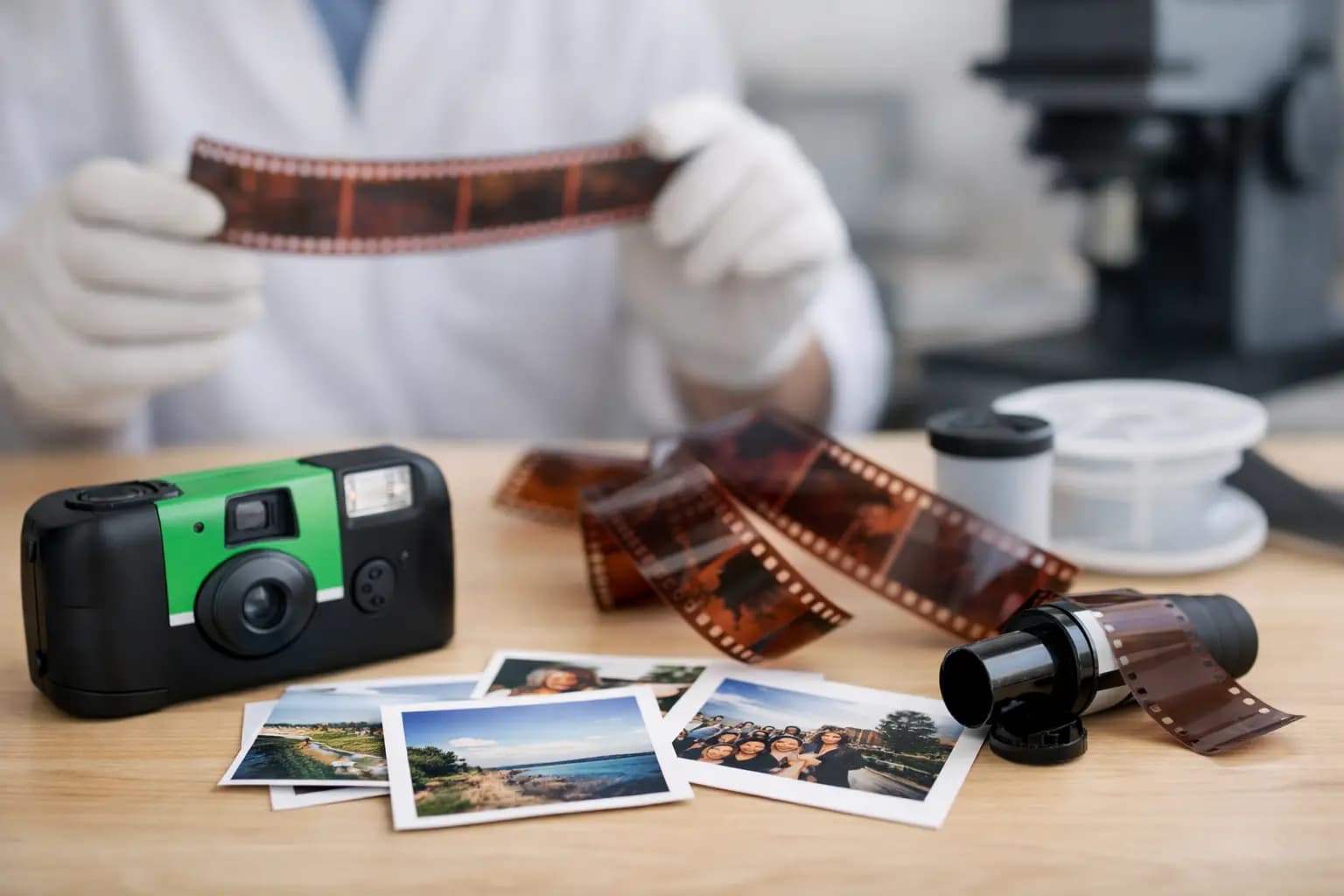
A disposable camera developing review is only useful if it answers the practical questions first: will your photos come back sharp, how long will it take, and are the results worth the cost? If you have a used disposable camera sitting in a drawer after a wedding, holiday or family party, those are the points that matter most.
Disposable cameras are simple to use, but getting them developed can feel less straightforward than it used to. High street options are fewer, processing times vary, and not every lab handles film with the same care. That means the real difference is not just whether a service can develop your camera, but how consistently it does it, how clearly it explains the process, and whether the final scans and prints actually justify sending it in.
What a disposable camera developing review should actually cover
A good review should look beyond price alone. Cheap processing sounds appealing until scans arrive flat, grainy in the wrong way, or badly cropped. Equally, the most expensive option is not automatically the best if turnaround is slow or communication is vague.
For most customers, the main decision points are image quality, turnaround, convenience and total cost. That includes whether the lab provides digital scans, whether prints are optional, and whether posting your camera feels simple and secure. If you are developing one camera from a family event, you may want quick results and a straightforward order. If you have several cameras from a wedding table or children’s party, value and consistency become more important.
Disposable camera developing review - what affects the final result?
The first thing to understand is that some limits come from the camera itself. Disposable cameras usually use basic lenses, fixed focus and built-in flash, so even excellent processing will not make dim indoor shots look like studio photography. If faces are soft, colours are muted or some frames are dark, that may be the camera and lighting rather than the lab.
That said, processing still makes a clear difference. A reliable lab will handle colour balance sensibly, scan at a quality worth keeping, and avoid obvious issues such as poor alignment, scratches or careless file delivery. Better labs also give you a cleaner, more usable digital result without over-editing the character out of the film.
Film age matters too. If the camera sat in a cupboard for years, there may be colour shifts or reduced contrast. Heat exposure can also affect the negatives before they ever reach the lab. This is why expectations should be realistic. The best developing services preserve what is on the film as accurately as possible, rather than promising perfection from every roll.
Quality of scans versus quality of prints
Many people now order development mainly for digital scans. That makes sense if you want to share images quickly or create photo gifts later. In this case, scan quality is a major part of any fair review. Files should be clear enough for everyday sharing and suitable for standard reprints.
Print quality still matters if you want the traditional experience of opening an envelope of developed holiday photos. A decent print should show natural skin tones, balanced contrast and clean detail for the format. It should not look muddy, overly dark or heavily cropped.
In practice, a strong service gives you both options clearly. You should know whether prints are included, whether scans come by download, and what level of image quality to expect before you place the order.
Turnaround times in a real-world disposable camera developing review
Turnaround is one of the biggest differences between providers. Some services are quick to take your order but slower once the film arrives. Others are efficient in the lab but vague about dispatch. For customers in the UK, this matters because post time adds to the total wait.
A realistic review should separate lab processing time from delivery time. If a company says processing takes a few working days, that does not include the days your parcel spends travelling. If you need photos for a birthday display or memorial album, that distinction matters.
The best experience is usually with a UK-based lab that gives clear timescales and keeps the process simple. Local support also helps if you need advice before sending a camera, especially if you are unsure whether it has already been used or whether the flash model can be processed like standard 35mm disposable film.
Convenience matters more than people expect
Convenience is easy to overlook until you try to get an old camera developed. A confusing order form, unclear pricing or awkward posting instructions quickly turns a simple task into a chore. Good service means knowing what to send, where to send it, what is included, and when to expect the results.
This is where specialist photo labs often stand out over generic retail options. They tend to explain the process more clearly and are better prepared for common questions. If you want prints, scans or both, that should be obvious from the start rather than added as a surprise later.
Cost - cheap is not always good value
Any honest disposable camera developing review should deal with price carefully. A low headline price may only cover processing, with scans and prints added afterwards. Another service may look dearer at first but include more useful output, which makes it better value overall.
It also depends on what you want back. If your main aim is to archive family memories, paying a bit more for dependable scans can be worthwhile. If you are developing novelty cameras from a party and quality is less critical, the cheapest practical option may be enough.
Postage should be included in your thinking as well. Sending one camera by post can feel less economical than sending several together. If you have multiple disposables to process, batching them often makes more sense.
How to judge a service before you send your camera
Reviews are helpful, but you can usually spot a dependable service before ordering. Look for clear wording about what is included, realistic turnaround times, and straightforward instructions. A good lab should tell you whether it develops 35mm disposable cameras, whether scans are standard, and how your files or prints will be returned.
It is also worth checking whether the business handles wider photo services. A lab that already processes film, scans old photos and works with print products tends to have more practical experience than a seller offering film development as a side line. That does not guarantee perfect results, but it is a good sign.
For UK customers, local processing has obvious advantages. It can mean quicker delivery, easier communication and less worry about sending irreplaceable images abroad. Photo Zone is one example of the sort of UK photo lab customers often look for - practical ordering, specialist film services and clear options without making the process complicated.
Common disappointments and how to avoid them
The biggest disappointment is usually expectation mismatch. People remember disposable camera photos as brighter and sharper than they really were. When the scans arrive with grain, flash fall-off or a few underexposed frames, they sometimes blame the lab unfairly.
Another issue is damaged or partly used cameras. If the film has been exposed to heat, opened accidentally, or left for years in poor storage, results can be inconsistent. In that case, even careful development may produce faded colours or blank frames.
To avoid frustration, choose a service that explains the process plainly and keep expectations in line with the camera. Disposable film can produce charming, candid images with real character, but it is still a basic format. The right lab preserves that character while keeping the finish clean and reliable.
Is disposable camera developing still worth it?
For many people, yes. Disposable cameras still capture occasions differently from phones. The photos often feel less staged, and the delay before seeing them is part of the appeal. Weddings, festivals, school trips and family gatherings all suit that style.
The value comes down to whether the images matter to you. If they do, developing them properly is worth it. A dependable lab gives you usable scans, optional prints and a process that does not waste time. That is really what this type of review should measure.
If you have a disposable camera ready to process, the best next step is a simple one: choose a UK lab that is clear about quality, timing and what you get back, then send it off before another year passes.