
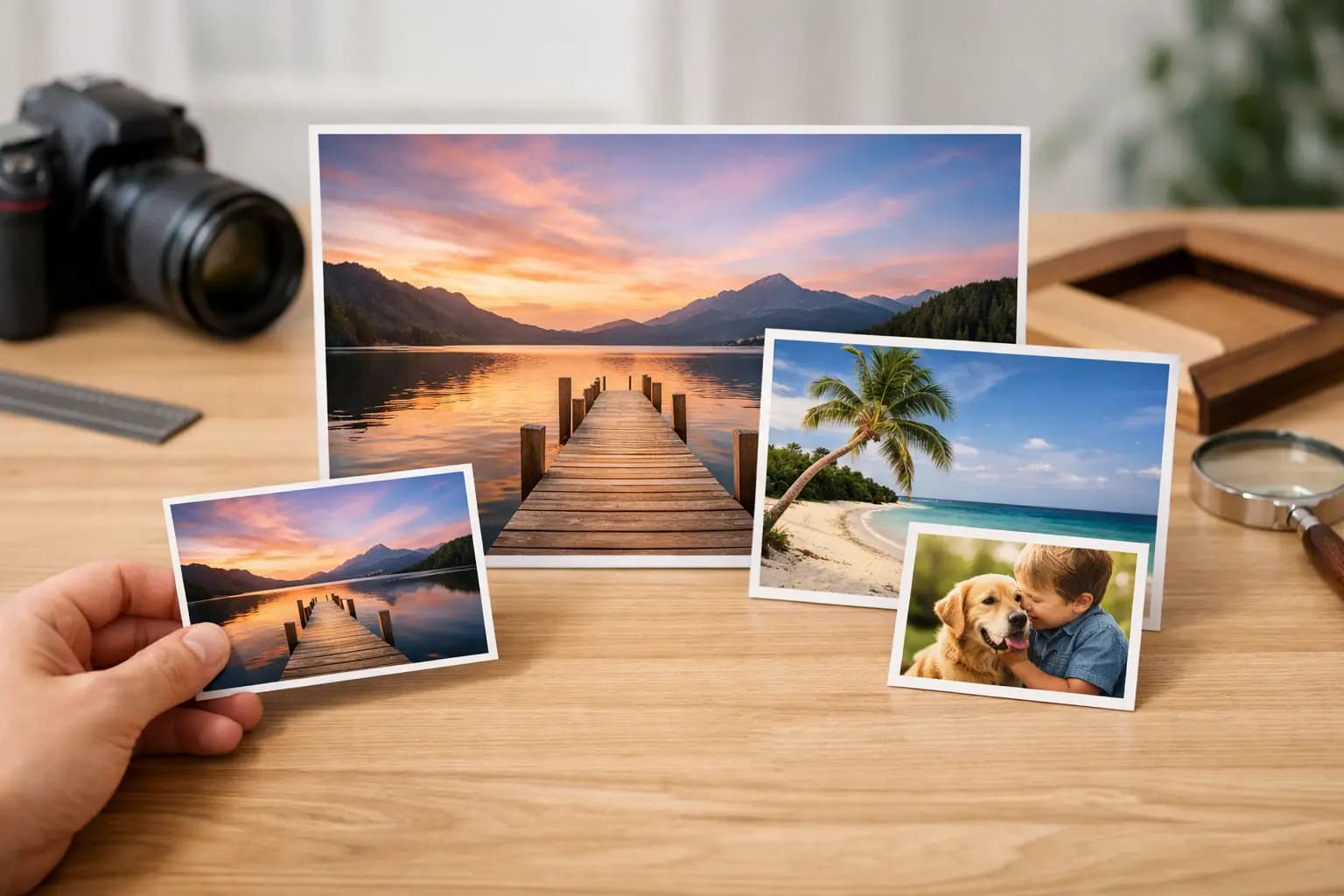
You have a great photo ready to print, then the awkward bit starts - what size photo print should I order? Go too small and the detail gets lost. Go too large and you may end up cropping off heads, stretching quality or buying a frame that does not fit. The right choice usually comes down to where the print is going, how the photo was taken and how much impact you want it to have.
If you are printing family photos, holiday snaps or pictures for a gift, you do not need to overthink it. A few size basics will help you choose quickly and get a result that looks right first time.
What size photo print should I order for everyday use?
For most customers, standard print sizes are the easiest place to start. They suit common frame sizes, albums and storage boxes, and they work well for phone photos and everyday digital images.
A 6x4 inch print is the classic choice. It is practical, affordable and ideal for photo albums, memory boxes and casual prints of day trips, birthdays and family moments. If you want a stack of prints to sort through at home, this size is usually the safest option.
A 7x5 inch print gives you a bit more presence without taking up much more space. It is a good middle ground if you want clearer detail for portraits or group shots, or if the print is going into a small frame on a shelf or desk.
An 8x6 inch print starts to feel more like a display print than a standard snapshot. It works well for favourite images you want to frame, especially if the photo has strong detail and good lighting.
If the print is for a wall rather than an album, many people move up to 10x8 inches or larger. That extra size helps a photo stand out across a room instead of disappearing into the background.
Start with where the print will go
The easiest way to decide what size to order is to think about the final use before you upload anything.
If the print is going into an album, 6x4 is usually the obvious answer. Most traditional albums are designed around standard print sizes, and smaller prints are easier to store, handle and reorder.
If you already have a frame, check its exact size first. This sounds basic, but it avoids one of the most common mistakes. People often order a print based on what looks right on screen, then realise the frame at home is a different format.
If you are filling a wall space, think about viewing distance. A print above a fireplace, sofa or stairway needs more visual weight than one sitting on a bedside table. In those cases, larger formats, canvases or framed enlargements generally work better than standard small prints.
If it is a gift, size often depends on how formal you want it to feel. A 6x4 can be a thoughtful extra tucked into a card or album. An 8x6, 10x8 or framed print feels more substantial and occasion-ready.
The shape of your photo matters as much as the size
One reason customers hesitate over print sizes is that not all photos are shot in the same shape. Your phone, compact camera and digital camera may all produce different image ratios. That affects whether a print will fit neatly or need cropping.
The standard 6x4 format uses a 3:2 ratio, which matches many digital cameras. A lot of phone photos, though, are closer to 4:3 or other proportions depending on the device and settings. That means if you order a standard print, the lab may need to trim a little from the top, bottom or sides to make it fit.
This is not necessarily a problem. Cropping can be minor and often goes unnoticed. But it matters if important details sit near the edge of the image, such as faces, hands or text.
If your photo is tightly composed, check the preview carefully before ordering. It is always better to spot a crop on screen than after the print arrives.
What size photo print should I order from my phone?
Phone photos can print very well, but the best size depends on image quality and how closely people will look at the final print.
For most recent smartphones, 6x4, 7x5 and 8x6 are all realistic choices for everyday photos. If the image is sharp and well lit, you can often go larger. A strong phone photo can make a very good 10x8, and sometimes bigger, especially for wall display.
The trade-off is that larger prints show more of everything. That includes nice detail, but also blur, digital noise and focus issues. If the photo was taken in low light, zoomed in heavily or pulled from a messaging app, it may look fine on a screen but softer in a large print.
As a rule, casual phone snaps are safest at smaller sizes, while your best phone images can handle enlargement. If you would happily use the image as a wallpaper or keep zooming in because it stays crisp, it is usually a good candidate for a larger print.
Choosing sizes for portraits, groups and landscapes
Different types of photos suit different print sizes.
Portraits of one or two people often look good at 7x5 or 8x6 because the faces are easy to see without needing a large frame. These sizes also work well for gifts and tabletop displays.
Group photos usually benefit from a little more room. If there are several faces in the shot, a 6x4 can feel cramped once printed. Going up to 7x5, 8x6 or 10x8 gives everyone more space and keeps expressions easier to recognise.
Landscape scenes, travel photos and wide outdoor shots often suit larger prints best. The appeal is usually in the detail and sense of space, which can get lost at small sizes. If you have a scenic image you really like, it is worth considering a larger enlargement, panoramic print or wall art format instead of a standard small print.
Small prints, large prints and everything in between
There is no single best answer to what size photo print should I order because the right size changes with the job.
Small prints are economical, easy to store and perfect for albums, scrapbooks and sharing multiple images at once. They are also a sensible choice if you are printing in bulk for family members.
Mid-size prints strike a good balance between cost and display value. They suit frames, shelves and gifts without taking over a room.
Large prints are best when you want one image to be noticed. They are less about quantity and more about impact. The larger you go, though, the more important image quality becomes, and the more carefully you need to think about cropping, sharpness and wall space.
A quick way to decide
If you want a simple approach, match the size to the purpose. For albums and everyday keepsakes, choose 6x4. For frames on desks or shelves, try 7x5 or 8x6. For favourite photos you want to display properly, look at 10x8 or larger. For statement pieces, wall art formats make more sense than standard prints.
That will cover most orders without making the process complicated.
When it is worth ordering bigger than a standard print
Some photos deserve more than a basic print size. Wedding images, milestone birthdays, a standout family portrait or a special holiday photo often look better when given more space.
A larger print can also be the better value choice if you know the image will be displayed rather than stored away. A strong photo printed well in a UK lab will usually give you far more enjoyment on a wall than the same image left on your camera roll.
That said, bigger is not always better. If the image is sentimental but technically weak, keeping it at a smaller size can actually make it look better. Soft focus and grain are less obvious on a small print, and the result often feels neater and more polished.
One last check before you order
Before you confirm any print size, look at three things: crop, sharpness and frame fit. Those quick checks solve most problems before they happen.
Make sure nothing important is being trimmed. Zoom in enough to judge whether the image is genuinely sharp. And if the print is going into a frame, measure the frame rather than guessing.
If you are still unsure, the safest choice is usually to order a standard size first. It keeps things simple, affordable and easy to reorder later in a larger format if you want more impact. At Photo Zone, that straightforward approach suits most customers well - quick ordering, clear size options and prints that look right where they are meant to go.
The best print size is not the biggest one or the most popular one. It is the one that suits your photo, your space and what you want the print to do once it arrives.