
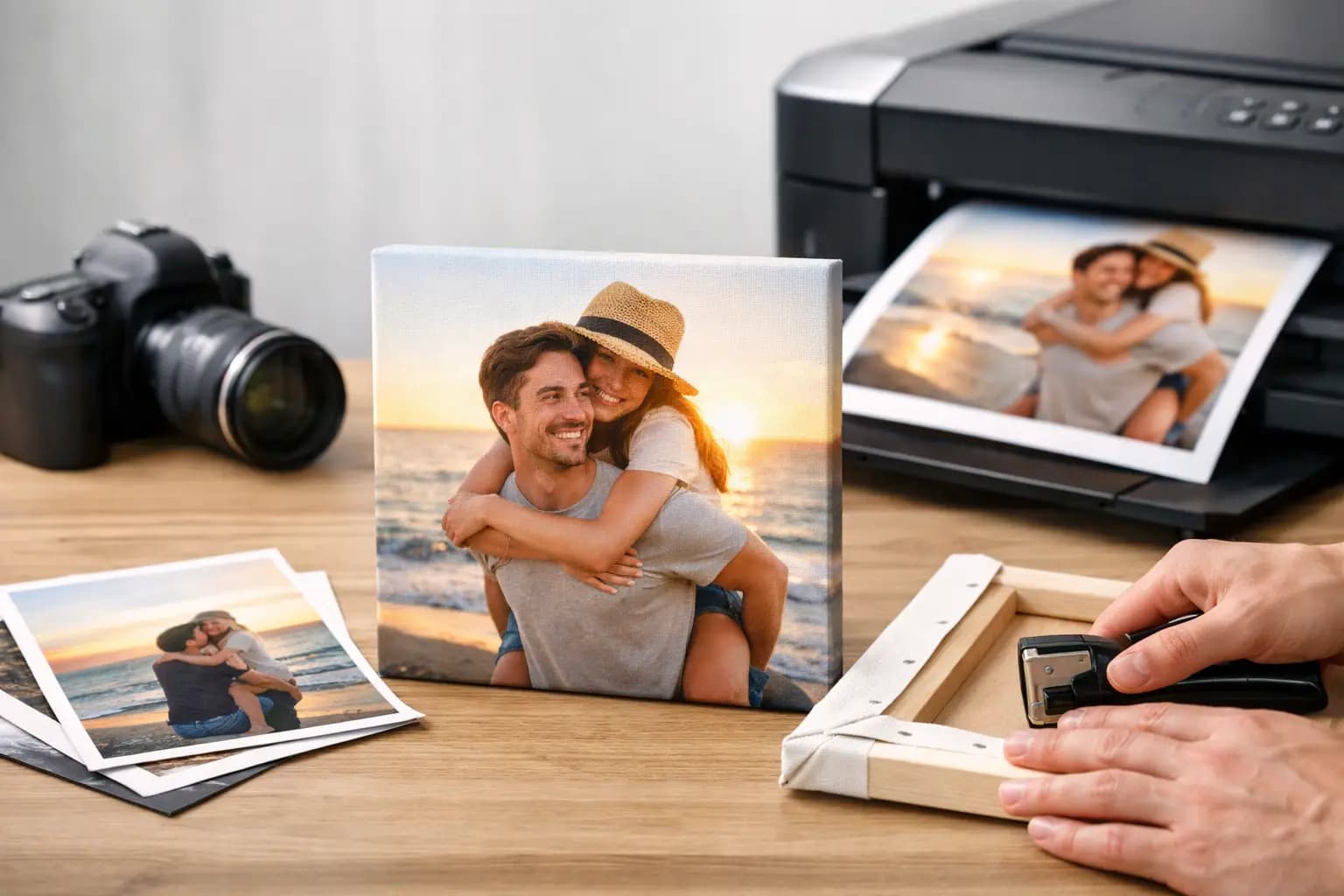
A phone full of good pictures is one thing. Getting one of them onto the wall in a way that still looks sharp, balanced and worth the space is another. If you are wondering how to turn photos into canvas prints, the main job is not complicated - choose the right image, match it to the right size, and prepare it properly so the final print looks clean and professional.
Canvas is popular because it softens reflections, suits most rooms and gives a photo more presence than a standard print. It is also a practical option for family pictures, holiday shots, pet portraits and gifts. That said, not every photo will work equally well, and a little care at the start can save disappointment later.
How to turn photos into canvas without losing quality
The first thing to check is image quality. A canvas print can only look as good as the file behind it. Photos taken on a recent smartphone are often perfectly suitable, but suitability depends on three things: resolution, sharpness and lighting.
If the image looks soft, grainy or heavily zoomed in on your screen, it will not improve when enlarged. Canvas has a textured surface, which can be forgiving in some cases, but it does not hide every issue. Blurred faces, poor focus and dark shadows are usually more obvious once the image is stretched over a frame and viewed on the wall.
A simple test helps. Open the photo at a decent size on your phone, tablet or computer and look closely at the faces and main details. If eyes look crisp and edges are clear, you are usually on the right track. If it already looks fuzzy, choose a different image or order a smaller canvas size.
This is where expectations matter. A close-up family portrait taken in good daylight can look excellent on a large canvas. A screenshot, social media download or old image sent through several messaging apps may only be suitable at a much smaller size. The file might appear fine at first glance, but repeated compression strips out detail.
Choosing the best photo for a canvas print
Some images naturally suit canvas better than others. Photos with a clear subject, good natural light and a simple background usually produce the strongest result. Landscapes, wedding shots, pet portraits and children playing outdoors tend to work well because they have depth, colour and a clear focal point.
Busy images can still work, but they need more care. If there are too many small details competing for attention, the finished canvas may feel cluttered from a distance. Wider wall art often works best with scenic shots or panoramic images, while square formats can suit Instagram-style images, close-up portraits or single subjects.
Black and white can also work very well on canvas, especially for older family photographs or more formal portraits. The texture of the material adds a softer finish, which can be attractive in hallways, bedrooms and living rooms. If you are using a scanned older photo, make sure the scan is clean and high quality before printing.
There is also the question of crop. A photo that looks fine on a screen may not fit a canvas shape without trimming something away. If faces or important details sit too close to the edges, they may be lost when the image is wrapped around the wooden frame. Leaving a little breathing room around the subject is usually safer.
Getting the size right
Size is one of the most common sticking points when people turn photos into canvas wall art. Bigger is not always better. The best size depends on the room, the viewing distance and the image itself.
For a shelf, sideboard or smaller wall, a compact canvas can look neat and well judged. For a main living room wall, a larger statement size often works better. The mistake people make is choosing a large format for a photo file that cannot support it. If the image is borderline in quality, reducing the print size is often the easiest way to keep it looking sharp.
It also helps to think about orientation. Portrait images suit narrower vertical spaces, such as hallways or between windows. Landscape images tend to work above sofas, beds and dining room furniture. Square canvases can be a good all-round option if you want something clean and modern without overthinking the layout.
If you are ordering a gift, consider the recipient's home. A very large canvas may be impressive, but only if they have somewhere sensible to hang it. Mid-sized options are often easier to place and more likely to go straight on the wall.
Editing before you order
You do not need advanced software to prepare a photo for canvas, but a few simple adjustments can make a noticeable difference. Brightness, contrast and cropping are the main ones.
If a photo is slightly dark, lifting the brightness can help recover detail. If it looks flat, a small contrast adjustment may give it more life. Be careful not to overdo filters or heavy sharpening. On a canvas print, strong edits can look harsh and unnatural, particularly in skin tones.
Cropping deserves special attention. Before ordering, make sure the composition still works in the canvas shape you have chosen. Check that heads, hands and key background details are not too near the edge. If the print wraps around the frame, some of the image may continue over the sides, so keep the important part of the picture safely within the front area.
For older photos, restoration or scanning quality can make the difference between an average canvas and a strong one. Dust marks, scratches and faded colour often show more clearly when enlarged. If the original is sentimental, it is worth taking time to prepare it properly before printing.
What canvas finish actually gives you
Canvas prints are not the same as standard photo enlargements. The material and frame change how the image is presented. The surface is textured, the print is stretched over a wooden frame, and the finished result is ready to display without needing a separate frame.
That makes canvas a straightforward choice for home décor and gifts. It is lighter than many framed products, easier to hang and less reflective under room lighting. In spaces with lamps, windows or bright overhead lights, this can be an advantage over glossy finishes.
The trade-off is that canvas is not the best option for every image. If you want very crisp detail, a glossy or lustre photo print or a mounted panel may sometimes show more sharpness. Canvas is better when you want a softer, warmer wall-art look rather than a highly polished photographic finish.
Ordering online without making it difficult
The easiest way to order is to upload the image, choose the size and check the preview carefully. This part should be quick, but it is worth spending an extra minute on the crop and orientation before checkout.
If the ordering system flags a low-resolution warning, pay attention to it. That usually means the image may not print well at the size selected. You can often fix the issue by choosing a smaller canvas or uploading the original file instead of a compressed copy.
It also helps to order from a UK lab if speed and consistency matter to you. Faster dispatch, straightforward customer support and a clear production process make a difference when you need a gift in time or simply do not want delays. For many customers, that reliability matters as much as the product itself.
Photo Zone keeps the process simple, with no-account ordering, practical product choices and UK lab production, which suits customers who want good results without extra steps.
Common mistakes to avoid when turning photos into canvas
Most disappointing canvas prints come down to a few avoidable problems. Using a low-quality file is the biggest one. The next is choosing a size that does not match the image. After that, it is usually cropping errors, where faces or important details end up too close to the edge.
Another common issue is selecting a photo that means a lot personally but is not actually the best image for printing. Sentiment matters, of course, but if there are three similar shots and one is clearly sharper, brighter and better balanced, that is the one to use. The memory stays the same, but the print will look much better.
Finally, think about where the canvas will hang. A colourful holiday scene may suit a kitchen or family room. A softer black and white portrait might look better in a hallway or bedroom. Matching the image to the space gives the finished print a more natural place in the home.
A good canvas print should feel easy to live with. If you choose a strong image, keep the size realistic and check the crop before ordering, turning a favourite photo into wall art is usually much simpler than people expect. The best results come from keeping it practical - start with a photo that already looks good, and let the print do the rest.