
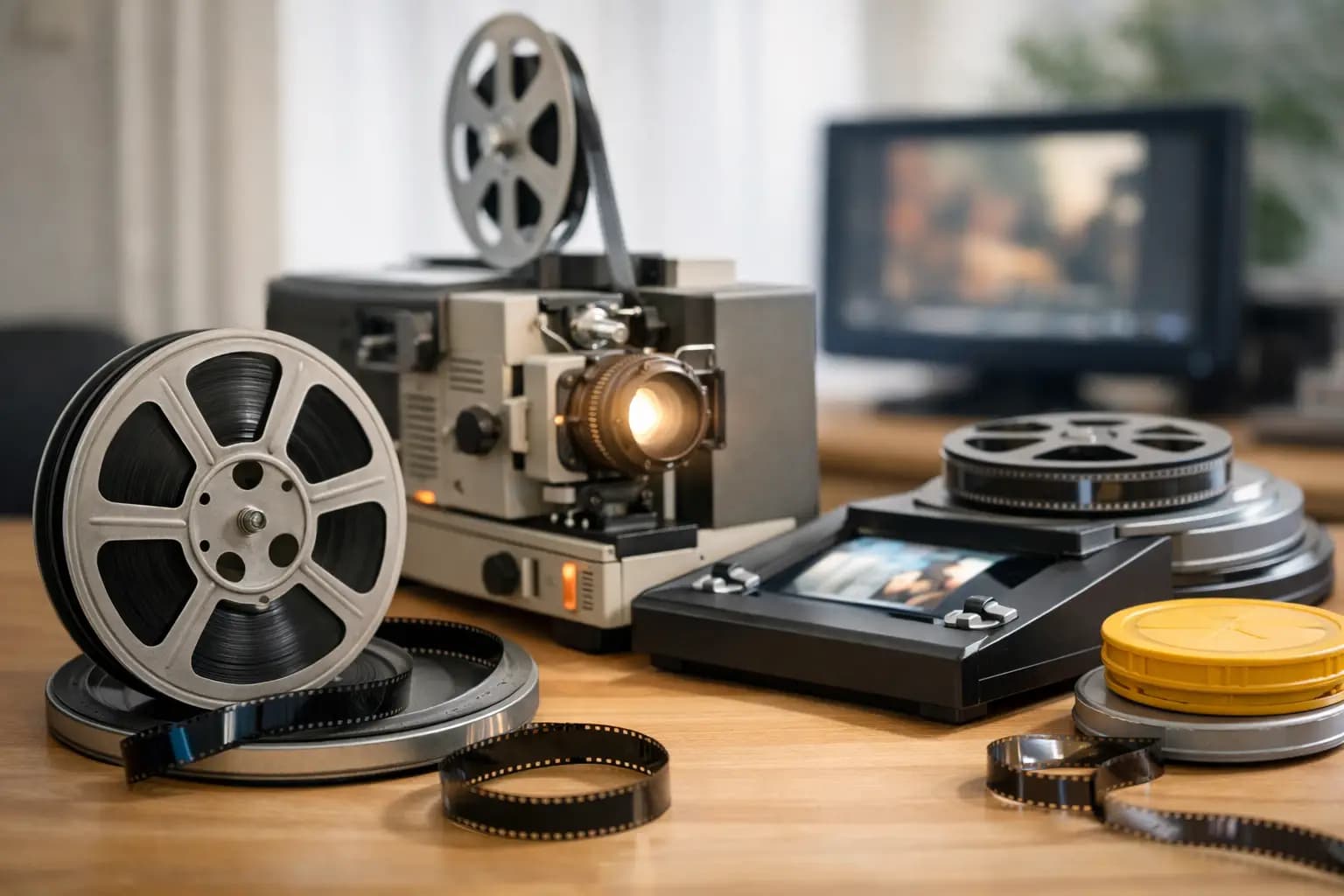
That box of old reels usually stays in the cupboard until a birthday, a house move or a family conversation brings it back into view. A good cine film transfer service turns those fragile reels into something you can actually watch, copy and share without needing a projector, a screen or a steady hand.
For many families, cine film holds the only moving footage of grandparents, childhood holidays, weddings and early home life. Unlike digital files, it cannot be backed up by simply dragging it onto a hard drive. If the film has been sitting for years, every delay adds a little more risk from dust, shrinkage, fading and breakage. That is why choosing the right service matters.
What a cine film transfer service actually does
At its simplest, a cine film transfer service converts old cine reels into a digital format. That might sound straightforward, but the quality of the result depends heavily on how the film is handled, scanned and prepared. Poor transfer work can leave you with flicker, soft detail, incorrect speed or cropped edges. Careful transfer work preserves far more of what is on the original reel.
Most customers are dealing with Standard 8 or Super 8 film, though some services also handle 16mm. The reel is inspected, cleaned where appropriate, and run through transfer equipment that captures each frame into a digital video file. Once converted, the footage can usually be supplied on USB, DVD or as a downloadable file, depending on the service.
This is also why cine film transfer is not quite the same as copying a VHS tape. Film is a physical strip made up of individual frames. It often needs more careful handling, especially if it is old, brittle or has not been stored well.
Why quality varies more than people expect
Not all transfers are produced in the same way. Some providers use basic projector-to-camera methods, while others use frame-by-frame scanning. The difference can be obvious once you play the footage back on a modern television or laptop.
A basic setup may be enough if your priority is simply to rescue the footage at the lowest possible price. But if you want a cleaner, steadier and more watchable result, it is worth checking how the transfer is done. Frame-by-frame capture generally gives better consistency, reduces flicker and keeps more image detail. For treasured family footage, that extra quality can make a real difference.
It also depends on the condition of the film. If reels are damaged, warped or spliced poorly, a cheap service may struggle. A more experienced lab is more likely to spot problems before they become permanent losses during transfer.
How to choose a cine film transfer service
The best choice is usually the one that balances quality, clear pricing and safe handling. Most customers do not need cinema-grade restoration, but they do need a service that treats irreplaceable reels properly.
Start with the basics. Check what film formats are accepted, how the footage will be returned, and whether inspection is included. Clear turnaround times matter too. If a service is vague about process, format or delivery, that is usually not a great sign.
It also helps to look at how practical the ordering process is. For many people, this is not a technical purchase. They simply want to bring in reels or send them by post, get them converted properly and receive files they can play easily. A reliable UK lab with straightforward ordering tends to suit that need better than a complicated specialist setup full of jargon.
If you are comparing services, a few questions are worth asking. Will the footage be transferred at the correct speed? Can damaged reels be assessed? Will the full frame area be captured, or will parts be cropped? What output options are available? These are not niche details. They affect whether the final file feels like a proper preservation copy or just a rough recording.
Sending reels by post or taking them in store
For many customers, convenience is as important as quality. If you live near a branch, in-store drop-off can feel more reassuring because you hand the reels to someone directly and can ask questions on the spot. If not, postal transfer is often the easiest option and works well when the packaging and process are clear.
When posting cine film, the key thing is protection. Reels should be packed securely so they do not shift around in transit. Original tins and boxes can help, but they should still be cushioned inside a larger parcel. If the film is already showing signs of damage, mention that when ordering so the lab knows to inspect it carefully.
A service that offers both local shop support and postal options gives customers more flexibility. That suits families who want specialist help without needing a specialist workflow.
What condition your cine film might be in
Many people assume their old reels are either fine or ruined. In practice, there is a middle ground. Some film may look dusty but transfer well. Other reels may have minor breaks or ageing that can still be managed. The problem is that you often cannot tell from the outside of the box.
Common issues include faded colour, brittle sections, damaged sprocket holes and old splices coming apart. Sound, if present, can also be affected by age. None of this automatically means the footage is lost, but it does mean the transfer service needs to know what it is dealing with.
This is where experience counts. A careful lab will assess the material rather than forcing it through equipment too quickly. That approach may take a little more time, but it lowers the chance of damage and usually produces a better result.
Output options that make sense today
Once your footage has been digitised, the next question is how you want to receive it. USB is often the most practical choice because it is easy to use on modern devices and simple to copy for family members. DVD may still suit some households, but it is no longer the most flexible format.
Digital files are the real value of the transfer. Once you have them, you can back them up, store them safely and share them without handling the original film again. That is often the point where old memories become part of everyday family life rather than something hidden away in a loft.
It is also sensible to think beyond the first copy. If a reel matters to you, keep more than one backup of the digital file. One on a computer is not enough. A second copy on an external drive or separate USB gives you a much safer position.
Price matters, but so does what is included
Most customers want a fair price, and rightly so. But cine film transfer is one of those services where the cheapest option is not always the best value. If a lower price means poor handling, heavy cropping or unstable image quality, you may end up paying twice to have it done again.
What matters is understanding what the price covers. Does it include reel inspection, transfer, digital file output and return of originals? Are there extra charges for damaged sections, longer reels or different delivery formats? Transparent pricing is usually a sign of a dependable service.
For a family archive, the cost is often easier to justify when you think about what is on the film. You are not just buying a file. You are preserving footage that may exist nowhere else.
Who benefits most from using a cine film transfer service
This service is not only for collectors or film enthusiasts. It is for ordinary households with a few reels of family history and no practical way to view them. It suits people clearing a relative's home, organising old media, preparing a meaningful gift or simply trying to preserve memories before they deteriorate further.
It is especially useful when several generations want access to the same footage. Once transferred, a reel of children playing in the garden or relatives at a wedding becomes easy to share with siblings, cousins and grandchildren.
For customers who want a straightforward, UK-based option with practical support, Photo Zone fits naturally into that picture. The process is simple, the service is specialist, and the aim is the same as with prints and scans - helping customers keep important memories safe without making the job complicated.
Old cine film rarely gets better with time, but it can still be saved and enjoyed. If you have reels stored away, the most helpful step is usually the simplest one: get them checked, get them transferred, and turn them into something your family can watch again.